
Featured

LUCY’S REVIEW

The Garden Left Behind Film Review

I saw The Garden Left Behind directed by Flavio Alves at the Reelout Film Festival. The film follows Tina, a transgender woman, and her grandmother, Eliana, of their life in New York City. We see their struggles from being undocumented immigrants, to the process of transitioning. Luckily Tina had a good group of friends who are also in the transgender community who helped support her. The film focused on Transgender issues with many correlating issues stemming off that. 

Being undocumented Mexican immigrants put a huge stress on both Tina and Eliana. Tina had to find work which is extremely difficult without a Green Card. In one scene, we saw her go to a rough part of town to buy an illegal Green Card which she then used to become a bartender. Eliana is constantly worrying about money and the risk of Tina working illegally. We can see how relevant this is currently with Donald Trump’s administration cracking down on ‘illegal immigrants’. Illegal immigrants have always faced some conflict but it is extremely difficult and stress inducing now. They face racism and have a worse quality of life due to the limitations they are faced with. They have a hard time finding work and cannot go to law enforcement so can easily be taken advantage of.

Being a transgender woman Tina faces challenges that most people do not even think about. We see her deal with the difficulty of transitioning. She has to see a psychiatrist many times who will decide if Tina is eligible to transition or not. Finally, after she got approved of having gender dysphoria, Tina had to go get blood work done. She learned what the next medical steps to transition will be and how much it will cost. It is an extremely expensive procedure to transition which limits lots of transgender people from doing so. It is not fair that because someone does not identify with a gender that they were assigned at birth they have to face hardship emotionally and financially. (Baba, H. B. 2020) Upon learning how much it was going to cost, Tina went ahead and put the most expensive thing she owned, her taxi cab, up for sale. She ended up only getting one third of what she asked for. As an illegal immigrant, she did not have health insurance which is an issue all immigrants face. The day she was supposed to start transitioning, she arrived at the clinic and was told that she had Wilson’s Disease. Wilson’s disease is a problem with the liver so she would not be able to transition due to those health implications. This was extremely devastating news that Tina had to face. The intersectional relationship of being a transgender immigrant is clearly shown in this film. 

In the movie, there were a few male figures presented. Tina’s boyfriend, a man that worked at the convenience store near her apartment named Chris, and some young adult men who play baseball with Chris. Tina had been seeing her boyfriend for 2 years but he did not like to be seen in public with her and would not introduce her to any of his friends or family. As soon as Tina told him she was going to transition, he stopped contacting her. Transgender people can be sexualized and are sometimes used to fill other people’s void. It was portrayed that Chris had a crush on Tina but was too ashamed to admit it to anybody. He felt attracted to Tina but was scared and confused of what society would think of him. In one of the final scenes, we see Chris and the baseball men coming home from practice. The teammates start shouting awful things at Tina and Chris is sitting uncomfortable in the backseat unsure of what to do. The movie takes a tragic turn as Chris gets out of the car and takes out his repressed anger and confusion by killing Tina. In 2018, there were the most transgender deaths in the U.S.A. Half of these deaths were women of colour. (Alvez. 2019) Part of the film’s plot is when the transgender community gathers together to support a transgender woman who was assaulted by two policemen. Tina had never considered herself an activist but found being part of this community liberating. The film shows extreme toxic masculinity. All the men in the movie, excluding the psychiatrist, show characteristics that are harmful to women and society as a whole. The binary way of thinking causes tragedy in communities. There are more than two genders and more than the heterosexual norm. If society becomes more conscious of showing that there is more than just the binary, we can change the ‘norm’ to something much more inclusive. 

The Garden Left Behind shows the intersectional issues between racism, transphobia, and binary thinking. Individually and together, all three of these pose their own complications and difficulties. Tina had to deal with plenty of adversity, that those deemed ‘normal’ in western society do not have to face. Tina’s grandmother was fairly traditional but loved Tina unconditionally. Eliana struggled to understand why Tina felt and did what she did but was supportive nonetheless. There is a beautiful scene where Eliana asks one of Tina’s transgender friends, ‘why?’ and the friend responded, ‘instead of asking why, you should ask if she’s happy.’ Happiness is all that people want for their loved ones and we need to have society be more understanding and inclusive. 

Works Cited

Alvez, Flavio, director. The Garden Left Behind. Reelout Film Festival, 2019.

Baba, Habibe B. “Module 2: Feminist Foundations.” Module. 2020.

https://www.youtube.com/watch?v=9u633bgbihU
SHAYLA’S REVIEW

Film Review: Unsettled: Seeking Refuge in America

The representation of marginalized groups in popular culture is rare. Reelout’s annual film festival provides an outlet to deconstruct what is seen as normalized within society. The many films screened at this festival counter traditional means of thinking including binaries, compulsory heterosexuality, and many more limited views. Unsettled: Seeking Refuge in America, highlights the challenges that queer immigrants face throughout this state of change in their lives. Not only are LGBTQ2S+ refugees enduring a surplus of immigration struggles, but they have to cope without the support of their families. This struggle coupled with finding a new and safe home is amplified and analyzed through an intersectional lens during this film. 

This film was presented as a documentary, following three core storylines. The central story was that of a gay refugee from Syria, Subhi. Not only did Subhi endure threats from an Islamic terrorist group, but he also felt unsafe in his home as a result of an abusive homophobic father. Subhi is followed through his transition from Syria to America. He struggles with trying to navigate this new life independently, but eventually finds himself as an influential leader for refugee rights in the United States. The second storyline presented follows Mari and Cheyenne, a lesbian couple from Angola. These women struggle to get their permanent visas in the states. Their story focuses on the adversity faced by immigrants within the legal system. The final story arch that is delivered in this film is that of a gender non conforming gay man from the Republic of Congo. Junior endures severe post-traumatic stress disorder (PTSD) which has resulted in alcoholism and what appears to be abandonment issues. He experienced great difficulty with establishing stable housing and often turned to sexual partners who saw him as a novelty and were fleeting. The intertwined presentation of all three storylines clearly highlights the intersectional struggles that LGBTQ2S+ immigrants face; these individuals have many identities that are to be analyzed cumulatively rather than in binaries. 

Given the mass publicity surrounding Donald Trump and his new policies regarding immigration, it is no surprise that individuals who migrate to the United States must encounter a period of waiting. The period that queer immigrants face is oftentimes greater due to the difficulties they encounter trying to find basic legal representation. Mari and Cheyenne came to the states seeking asylum, thus they did not have visas like Subhi and Junior. This couple struggled to find a lawyer who would accept a meeting with them. The meeting itself followed a long waiting period in which the individuals could not work to support themselves. The lawyer accepted their case however, the retelling of their story to support the asylum claim entailed discussing the terror that they had faced prior, stirring intense emotional turmoil. Once their case was presented they continued waiting to see if their claim had been accepted. The struggle of seeking asylum is taxing on the individuals who have applied as they are in the states on a temporary basis and could be removed and returned to their old countries at any moment. 

This film expertly identifies the immigration struggles endured by queer refugees by highlighting the intersectional trials that they face. Mari and Cheyenne stated that they were hoping they would face less discrimination in America however, the stigma surrounding immigrants, in general, implies a negative connotation. This coupled with their queer identity puts them at risk. This is elaborated on in “Being in Question” by Sara Ahmed when she states that, “To be identified as a stranger is to be identified as not being from here, or not being entitled to be here; you are identified as someone who endangers who is here” (117). Not only are queer immigrants seen as strangers, but they embody a multiplicity of aspects of contradicting norms: abnormal sexuality and race. These unknown factors are often embodied by strangers which is why they are often perceived as dangerous. Queer immigrants are victims of this narrow social constructionism as they oppose what is ‘typical’ of society. 

A supplementary burden that is unique to queer refugees is their lack of familial support. Often times refugees flee their native countries as a family, however more often than not with queer individuals, this is not the case. Many refugees come from countries where the presentation of queer values is immoral, in some countries it is even punished by death. In these countries, an adapted version of the “white picket fence” family described in ““As Seen on TV”: Gender, Television, and Popular Culture” by Jenn Brandt is normalized. This family entails: a “dad as the breadwinner, stay-at-home mom, and two smiling and obedient children,” highlighting heteronormative norms (Brandt, 105).  Subhi’s family was complacent with the “white picket fence” family, and as a result, endured abuse from his father. Mari and Cheyenne were on the receiving end of hate speech along the lines of “I wish you weren’t born” from one of their mothers. Junior experienced isolation from his family due to his fluid gender identity and sexuality. His mother was a well-known preacher in his hometown, who often taught about the ‘wrongs’ of queer beliefs. The four individuals in this film were raised in hegemonic cultures, suppressing non-normative expressions. The film exemplified this when reinforcing the multitude of struggles that queer refugees face, additional to intersectional discrimination. 

Despite the array of challenges the four individuals in this film endured, they are now all residents in the states with stable incomes and housing. As a key player, Subhi has reinforced what Audre Lorde claims, “it is the responsibility of the oppressed to teach the oppressors their mistakes “ (114). Social constructionism is rooted in the misbeliefs portrayed by society, which is why re-educating individuals who blindly comply with norms is essential. Biases are innate within individuals as a result of the environment that surrounds them however, this is not an excuse to be blatantly discriminatory. Reelout’s film festival serves as both an educational tool and a safe space, where learning and advocating are encouraged. A similar attitude is seen through the #nbdcampaign, where respect and learning are central themes (No Big Deal). Unsettled: Seeking Refuge in America, has skillfully focused on these core concepts by raising awareness of the discrimination and hardships that queer refugees must face alone.  

Word Count: 1048

Works Cited 

Ahmed, Sara. “Being in Question” in Living a Feminist Life. Durham: Duke University Press, 2017. 11-134. 

Brandt, Jenn. “‘As Seen on TV’: Gender, Television, and Popular Culture.” in Gender and Pop Culture: A Text Reader, edited by Adrienne Trier-Bieniek, 2014, 103-120.

Lorde, Audre. 1984. “Age, Race, Class, and Sex: Women Redefining Difference.” Pp. 114-123 in Sister Outsider: Essays and Speeches. Freedom, CA: Crossing Press.

No Big Deal, www.nbdcampaign.ca/

CIARA’S REVIEW

Film Review: Vision Portraits

The film that I watched is called “Vision Portraits”  written and directed by Rodney Evans. The film followed four artists who have different levels of visual impairment. Each person is a different type of artist and they explain how being visually impaired impacts their craft. The first artist introduced is actually the writer and director of the film Rodney Evans, he was diagnosed with retina pigmentosa in 1996 and has been gradually losing his vision ever since. He is a filmmaker and has found a way to let his disability help him see things in a different perspective and propel him in his artistic endeavors. The second artist introduced is John a photographer who had a stroke when he was 33 and lost his vision and was paralyzed. He was in the hospital for over a year and had to learn how to walk again. When he lost his vision, he decided he would continue to take photos because he always saw what he wanted in his mind first anyways. He needed assistants to help him position the cameras along with other things, but he continued doing what he loved after he became visually impaired. The third artist we meet is Kayla, a dancer who was born with vision in only one eye. Her vision eventually became worse in her seeing eye as she got older but that didn’t stop her from following her dream of becoming a dancer. Kayla sees her disability as an asset to her dancing because she can feel and sense things better than those with full vision. Kayla struggled with depression and suicidal thoughts because of her visual impairment but she eventually turned it into something good by making her own dance show called “Nearly Sighted” where she uses her art form to try to teach people about having different perspectives. The final artist we meet is Ryan who is a writer that was diagnosed with retinal pigmentosa when he was 18 and gradually went blind after that. He has used his experiences being blind to write comedically about his life and struggles. 

This film is full of intersectionality at all points. Intersectionality can be understood as how systems of inequality interact and overlap. “There are countless individuals who experience oppression in society because of the cumulative and intersecting effects of racism, sexism, class oppression, transphobia, able-ism and more”. (Kaufman, Intersectionality for beginners). Most of the artists can not only be put into the category of inequality through disability but also through race, sexual orientation, and gender. Rodney is a man who is black and visually impaired, he may be discriminated against because of both of those things not only because of one. John is a man who is gay, HIV positive, and blind he could be discriminated against or experience inequality due to any of those things. Kayla is a woman who is black, visually impaired, and struggled with mental illness and could experience many dimensions of discrimination. The intersectionality in this film is very apparent because most of the artists don’t only fall into one category, they all experience multiple struggles in their lives. This is a very positive thing because the film represents many different groups of people and talks about how they are impacted. 

The film mostly focuses on how the artists are impacted by being visually impaired or blind. The reading from class “Escaping the ‘Evil Avenger’ and the ‘Supercrip’: Images of disability in popular television” by Alison Harnett, talked a lot about under-representation of the disabled community in television. It argued that “when it is portrayed on screen, the images are often inaccurate or unfair” (21). In my opinion this film was very accurate in the way it portrayed the life of a disabled person specifically someone with visual impairment. The film didn’t focus a lot on why life is hard for people with disabilities, but it focused a lot on why life is still beautiful even when you cannot see it. The film focused on how these artists used their different perspectives of being visually impaired to make their art better and to see beauty in a different way, which I found very inspiring. Even though they didn’t focus a lot on why being blind makes life hard they did touch on it and I thought it was a very realistic view and depiction of hardships people with disabilities endure. For example, one thing they touch on is how it’s hard to use public transportation and how it can sometimes be uncomfortable for blind people. They also talked about having relationships with people when you are blind, Rodney talked about how he felt that people wouldn’t want to be in a relationship with him because they see him being blind as a burden. One of the most important things I think they talked about was how having a disability can impact your probability of getting a job over someone who doesn’t require accommodations.

 A central focus of the film was also about transitioning from having sight to becoming blind. Each artist talks about how when they first started going blind, they would pretend that they were sighted and try to pass as being able to see. They talk about how difficult it really is to be pretending to be something you are not in order to feel normal. Rodney used a walking cane instead of a blind person’s cane at first because he didn’t want to be identified as blind right when people met him. Ryan talked about how he would memorize his books at a book reading so it would look like he was reading it, so people did not know he was blind. Kayla talked about using muscle memory to get around the city because she could not see where she was going. John talked about how he would use the small sliver of sight he had left to follow people’s feet in the streets and pretend he still had his sight. Overall each artist had their own story of how they pretended they were still sighted when they were transitioning from being able to see to being blind. This film was very positive, and I thought it incorporated a lot of things that need to be talked about in our current society.   

 Word Count: 1052

Works Cited

Harnett, Alison. “Escaping the ‘evil avenger’ and the’ supercrip’: Images of disability in popular television.” Irish Communications Review, vol. 8, 2000, pp. 21-29.

Kaufman, Peter, 2018. “Intersectionality for Beginners.”

PERRIE’S REELOUT REVIEW

Changing the Game movie trailer

Changing The Game

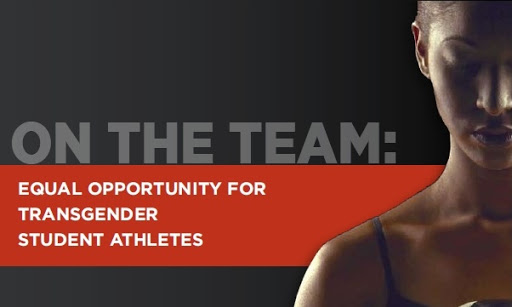
Revolutionary film Changing the Game is a documentary style movie which follows the lives of three transgender athletes during their teenage years. Directed by Michael Barnett, a critically acclaimed director, this film is one of 10 others Barnett has directed throughout his career in film. Each athlete featured in the documentary is shown at different stages in their transitions as transgender teens. Among those portrayed includes Sarah, a fierce competitive skier and teen policymaker. Athlete Andraya Yearwood is a track star amid her own transition into womanhood. The film then centers on Mack Beggs, a teen who made headlines after becoming the 2019 Texas State Wrestling Champion. Beggs, sharing his life story with the camera, shows the painful confusion of being praised as a hero, yet also receiving hateful death threats from protesters. Changing the Game is a film which is incredibly raw, depicting the teens in their most vulnerable moments. Moments of vulnerability include Mack Beggs, seated for an interview, speaking about his past suicide attempts, the body dysmorphia, and gender dysphoria that wrestling aides him in overcoming. Andraya speaks about how she fears she will never be loved as a trans girl, afraid men would label her a freak, threatened by her transgender identity. Sarah is shown on screen speaking to a courthouse of people protesting against her- the epitome of bravery and courage. This movie depicts the wins and losses of sports, and the ups and downs synonymous with teenage years. One of the most amazing factors about this documentary is its ability to depict the individuals as who they truly are- simply teens battling to be their true selves, making them like every other teenager in the world.

Intersectionality, as with many other social factors, is a concept deeply ingrained throughout this documentary. Intersectionality is described as the interconnected nature of social categorizations such as race, class, gender, creating overlapping and interdependent systems of discrimination or disadvantage” (Kaufman, Intersectionality for Beginners.) Rarely are we able to see multiple layers of oppression in such clear, definite terms as depicted in this film. Onscreen, transgender teens battle with multiple levels of oppression based on factors such as race, ethnicity, gender, gender identity, etc. Andraya Yearwood for example, is an African American student and track athlete living in Connecticut, who just so happens to be a transgender. Andraya is depicted facing multiple levels of oppression- firstly, being an African American in the United States is tied to all kinds of oppression, such as institutional racism. Andraya is also a woman, which is linked with oppressive connotations in Western society. Lastly, she is a transgender teen, clearly coming with a slew of its own problems and issues to overcome. Andraya, who is quite open about her gender identity, fights unacceptance and rejection from the African American community, students and peers (including other girls), and oppression from a male dominated society which harps on women in sports. Unfortunately, Andraya is not the only individual with whom struggles with many layers of oppression. Sarah Rose Huckman is another teen fighting with her gender identity who experiences intersectional discrimination. Also a person of colour, Sarah was adopted from Puerto Rico as an infant and was raised in the United States. Sarah also shares the same weight of an identity subject to intersectional oppression as Andraya. These transgender athletes face problems of systemic oppression through institutional racism, as well as misogynistic ideals and gender normativity.

Another theme central to the film is the idea of a normalized binary in society. In this case, gender binaries are all too prevalent. Gender binaries are defined as the “classification of gender into two distinct and opposite forms of masculine and feminine, whether by social system or cultural belief” (Raskoff, Signs of Gender.) The movie also heavily addresses the idea of normativity. The enforcement of what is considered normal occurs heavily in sports, where gender norms and gender binaries are pushed to extreme ideals. In sports, one either participates on a women’s or men’s team, and, consequently, there is no space for individuals who do not fit the gender binary in sports, as seen throughout this documentary. The men and women portrayed in this movie do not fit into society’s restrictive gender binaries, yet these binaries remain to be forced upon them all the same. In the movie, competitors of the three athletes raise concern that their transgender opponents do not fit the binary gender norms required to compete. For example, parents of Andraya’s competitors are heard yelling that Andraya is “making a mockery of girls, of women’s rights, and she’s a real shame.” Another point that is brought up is that Andraya, being a trans female, does not get her period, does not have a feminine body, nor is she the same as the other girls competing. This absolute binary way of thinking completely adheres to the gender norms of western society- that all girls must get their periods, all female bodies look the same, and that all bodies adhere to the norm of having an ideal feminine physique. The relationship of gender and performance level is pointed out by this parent, because Andraya does not adhere to the white, feminine ideal of womanhood.

It is truly refreshing that through this movie, one is able to see the depiction of transgender teenage athletes being their true authentic selves in media representation. Rarely is this type of character expression ever seen in mainstream popular culture, and if so, LGBT characters are often subjected to problematic representation. This involves issues such as queerbaiting, as mentioned in Bea Mitchell’s “Queer Baiting: What Is It and Why Is It a Problem?” (Mitchell, Queerbaiting: What Is It and Why Is It a Problem?) To see the transgender individuals sharing their stories and being so raw and open about their lives was such a nice change from the norms of mainstream media. In addition, it is incredible to see the individuals portrayed as normal teenagers with a focus on them as athletes, rather than the entire content of their character surrounding their trans identities. To see the girls at a sleepover with peers, laughing the night away, for example, truly depicts them as what they are: teenagers being their authentic, true selves. This depiction of the individuals featured show not only a trans person, but multifaceted individuals with many talents and interests. This is a pleasant deviation from the all too common depiction of LGBTQ individuals in the media, their entire character solely based on their gender identity. In conclusion, Changing the Game truly has changed the game in terms of filmmaking and inclusive LBTQ representation.

Word count: 1097

Citations

Kaufman, Peter. “Intersectionality for Beginners.” Everyday Sociology Blog. N.p.,

23 Apr. 2018. Web.

Raskoff, Sally. “Signs of Gender.” Everyday Sociology Blog. N.p., 27 Mar. 2017.

Web. 11 Feb. 2020.

Mitchell, Bea. “Queerbaiting: What Is It and Why Is It a Problem?” Pink News

Online. N.p., 26 Feb. 2018. Web. 13 Feb. 2020.

Design a site like this with WordPress.com
Get started